Links

Wednesday, September 23, 2015

Appreciation Round Up


Appreciations are the glue that holds a class together.
Talk about an easy, no prep, power activity! This is one that gets easier each time you do it, so you have to trust me:
  • Have the entire class stand in a circle
  • Dim the classroom lights
  • Put on some soft, relaxing music
  • Start appreciating!  You may open up appreciations to the outside world or limit them to the people in the room. I like to alternate between the two.
  • Examples of appreciations:
    • “I appreciate how Robert always walks through the door with a smile.”
    • “I appreciate Zaina’s laugh.”
    • “I appreciate how Juan helps me with Geometry.”
    • “I appreciate Bethany’s mermaid hair.”
    • “I appreciate Nicole for sharing her hot cheetos with me.”
As you can see, some are deeper than others but they all have the same warming effect. Be prepared for silence the first few times you do it. You, in fact, may be the only one who says any appreciations during the first couple of attempts - that is okay. I promise you it will be worth the wait! 
The bonus effect of this game is the more you do it, the more kids will be looking for things to appreciate on a day to day basis. It highlights the need to focus on the positive in our sometimes crazy world.

Sunday, September 13, 2015

Pop Culture Writing Assignment: Humans of New York

Humans of New York (HONY) Inspired Monologue

Below, you will find the instructions for a slam dunk assignment I did for the first time last year. Pair pop culture with writers' voice, tone, and creativity and sprinkle in a little public speaking and you have a Common Core darling! Have fun and post pix in the comments below if you try it out.

In this speech, you are taking on the identity of a person in a photograph that you have never met.


HONY started in November 2010 by photographer Brandon Stanton. He has gathered over 6,000 portraits of “Humans of New York.”  Paired with each photo is a SHORT blurb about the person.  Most always it is written from their perspective and their voice (1st person).


1.) Access “Humans of New York” HONY via the following ways:
twitter
instagram/facebook page


2.) Read through as many profiles as you like until you find one that “speaks to you.”  It needs to compel you, make you wonder, and maybe even reflect on your own life.  It can remind you of yourself or be your polar opposite.  It can be someone you respect or disrespect.


3.) On a Google Doc, retype their blurb and then ADD YOUR continuation of their story.  This is fictional.  It needs to sound like it was written in their voice and you will be inventing a longer story for them. No matter how long their blurb is, your portion of their story must be AT LEAST one typed page (12 pt. double spaced) but can be longer to meet time requirements.


4.) YOUR MONOLOGUE WILL BE MEMORIZED using no cards.  You are ACTING like the person you have chosen, taking on their characteristics and voice, and mannerisms.  You will, of course, be creating all of this because all you have is a still photo and a short blurb.


5.) TIMING:  Your speech should be between 1 minute and 2 minutes


6.) DRESS in a similar fashion to your HONY
DUE:_________________________________________________________

Tuesday, September 8, 2015

{REPOST}: Silly Sculptures: 10 minutes = laughter, joy, and re-engagement.


My seniors are stressed.  Some for good reasons:  choosing between college admittances, touring campuses for final decisions, and solidifying rooming situations.  Others are attending Saturday school to make up credits so they can graduation.  All are victim to “Spring fever” and their detachment process towards high school is in full effect:  although healthy, every senior teacher knows the challenges of engaging 12th graders in spring.  

So, this week we stole 10 minutes of precious instructional minutes and built a silly sculpture. For 10 minutes, we were not worried about grades, graduation, or the future.  We were just allowed to be creative and, most importantly, laugh.  

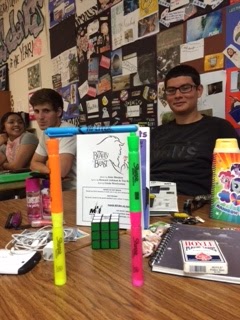
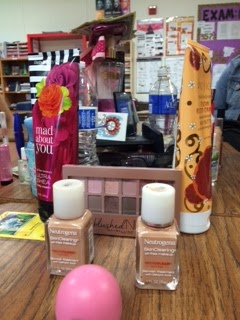
In “Silly Sculpture” the kids are challenged to create a sculpture that symbolizes the team. The trick is, they are only allowed to use items found on them or in their backpack, binder, or purses.  This activity is three-fold:  you learn about your classmates by the items they carry (and how!), you see which kids emerge as leaders and which as followers, and finally they have to talk to each other to create one piece of art
Directions:
  1. Place kids in groups of 3-6 kids each
  2. Have groups squish desks together so there are no spaces or gaps in between.  This is their platform.
  3. Have everyone empty out their “stuff” on to the desks.  This may be the most entertaining part of all.  The stories that come with the items have the kids cracking up.  One girl had a small plastic walrus in her purse...seriously!
  4. Now give the kids 9 minutes on the timer to create their sculpture, decide what all of the items stand for and nominate one spokesperson per group to guide the class through their piece of art.
  5. Once sculpture is made, direct the groups to discuss WHY their sculpture represents their group.  Spokesperson may want to jot down notes.
  6. Spokesperson for each group stands and delivers an explanation of why their sculpture represents their group.

Some memorable explanations today:
  • Glasses for us to see the future clearly
  • asthma inhaler so we may breathe in life
  • earbuds to represent listening to each other
  • money shows we crave security
  • even a tampon to represent equality between the sexes!

I would say the entire process took about 16-17 minutes (you do need to go from group to group to “keep them moving”), but after we completed it, I had such a productive remainder of my two hour block.  The kids were energized, connected, feeling positive, and rewarded me with a strong productive writers’ workshop session.

The most important aspect of the day:  we laughed.  We all just laughed, and I for one needed that.


Wednesday, August 26, 2015

Motivational Activity: Wonder Word & Vision Board

Image result for words
Part 1 Wonder Word: At the start of each semester, every student will pick ONE WORD that will drive their actions for the next few months.  The word should be something that they struggle with, something that needs their attention, that needs work.
  • First, have students come up with a list of 3-5 bad habits they have.  These should be things they need to work on.  Examples to inspire:
    • Procrastinates
    • Angry
    • Lazy
    • Loud
    • Mean
    • Jealous
    • Doubt
    • Discouraged
Next, have the students write down an OPPOSITE word next to each NEGATIVE word: a word that could attack that bad habit.  Examples:
    • Procrastinates:  ACTION
    • Angry:  PEACE
    • Lazy:  ENERGY
    • Loud:  STILL
    • Mean:  KINDNESS
    • Jealous:  ACCEPTANCE
    • Doubt:  POWER
    • Discouraged:  OPTIMISTIC
  • Now, have students pick ONE Wonder word they want to use to guide their year.
  • Write it down on a 4 x 6 notecard (LARGE and IN DARK MARKER)
  • Write student name in the bottom right hand corner
Part II Vision Board:
Once they have their  Wonder Word, the Vision Board bring it to life.  They may create one organically with paper (below) or search apps for “Vision Board” to create one electronically on their Smartphone or tablet.
Paper poster:
  • Take a large piece of construction paper
  • Have students glue the index card with their Wonder Word in the middle of the paper
  • Image hunt:  Students now look for images (in magazines, the internet, or by drawing) that represent their word.  
    • For example, if their Wonder Word is “action,” they might cut out pictures of athletes, or people writing, working, planning, or cleaning.  If their word is “kindness,” they might find pictures of volunteer work, or people smiling and listening to their friends,

  • Glue those images onto the Vision Board
  • Students share their Vision Board in small groups or whole class
  • Post on wall in room
  • Revisit Wonder Word and Vision Board often (daily, weekly, monthly).  Circle up and talk about the struggles kids are having with their word or the strength they have gained from their word,

Monday, August 24, 2015

How to Seat Students Strategically yet Secretly

On the first day of school or anytime you want to rearrange your clientele, greet them at the door with a smile and a playing card.
  • Buy two decks of regular playing cards:  tape one set of cards on the desks and place the other matching set in a bowl.  
  • As they enter your classroom, they pull a card and search for their match.  Once they find it, they have found their seat.  Once everyone is seated, walk through class checking their matches and collecting their “loose” card.  
  • Place all loose cards back in the bowl and later in class when discussing school supplies, draw a card and raffle off a pencil, highlighter, or notebook.  The kids love it and you have seated them “by chance,” keeping them from clustering up with friends and isolating others.
  • BONUS:  You now also have an easy way to “choose” students by chance.  Leave cards taped on desk and keep their partners in a can.  Pull a card throughout the year for a “volunteer” or a game.  The randomness of the cards ensures you will never be “picking on anyone.”
“Social isolation, which is especially risky for adolescents, can result from students being ignored, bullied, or teased and tends to flourish in environments predominated by social cliques” (Blum, 2005, p.3).  With this simple exercise, these “cliques” are covertly broken, and you have proven you are organized and creative within the first seconds of meeting them.

Thursday, August 20, 2015

Class Energizer: Bear-Ninja-Cowboy


Image result for bear cowboy ninja

(REPOST)

What do you do when your classes will resemble a collective episode of the “Walking Dead.”  Yes, teenagers can resemble zombies, sleep deprived, hormonal zombies.

Unfortunately, I need my zombies to be productive.  We need to get workin’.

WIth that being said, I also needed to bridge the gap from a sloth-like class to an intellectual powerhouse of a classroom. What’s a girl to do?

Bear-Ninja-Cowboy.

This is a simple energizer that includes the entire class, takes no more than 10 minutes, and will wake everyone up with a little laughter while also reconnecting your kids to one another (need to build that classroom community back up, right?).  It is a take off on ROCK-PAPER-SCISSORS, but the kids use their entire body to portray one of the three characters.  It is an elimination game, so you may want to have a little candy treat for your final two kids.

Simple steps:

1. Have everyone stand up and cue some cheesy music of your choice (I used the original soundtrack from the TV show “Glee”).  
2. Kids mill around to the music and when the music stops, so do they.
3. Have them face the person closest to them, shake hands, and then turn so they are back to back.
4. You now countdown (3-2-1-DRAW!)
5. They take three steps away from one another and then flip around on the word “DRAW”!
6. This is where they have three options:
A. BEAR:  Raise hands over head like claws, stand on tip toes, and growl REALLY LOUD!
B. NINJA:  Crouch down, pull one knee up, place hands in front of chest, flat like in a karate chop position.  Make “Ninja sounds” (i.e. hayahhh!)
C. COWBOY:  Stand up straight and tall, have two guns pulled at waist level, make a gun shot shound (bam, bam!).
7. DEATH CODE:
A. Bear KILLS Ninja
B. Ninja KILLS Cowboy
C. Cowboy KILLS Bear

8. Dead person sits down.  If there is a TIE, both people stay alive and continue to mill about the room until they pair up again.
9. Keep going until you have your final two.  Have the whole class circle around them and cheer them on.  
10. Make sure to reward then both for a job well done.

This is silly, takes little to no prep, and can be used anytime your class needs a “pick-me-up” or even when you have the dreaded ten minutes left until the bell at the end of class.

Now we shall see if the bears, ninjas, and cowboys can kill the post summer zombies!  Wish me luck!