Links

Tuesday, April 21, 2015

Cheating Yourself: Then why do I feel bad?

Last Friday, four kids in my class cheated.  ALL ON THE SAME DAY.  

My seniors in my Speech Communications class have been wrestling with the dreaded commencement speech for the Class of 2015’s graduation. We spend a few weeks on this assignment each year, breaking it down into manageable chunks that (I thought) allow the kids oodles of time to process and be creative.

We meditate on the last four years, we brainstorm on both collective and personal memories, and we talk about what high school means to us. We discuss extended metaphors that are both cheesy and powerful and the symbolism behind our mascots, a bird and a tree, that can quickly become cliche. Then we even go into the computer lab and specifically look up canned graduation speeches and discuss how we can be inspired by others yet NOT STEAL THEM. Well, they stole them.  In fact, two students in one class STOLE THE SAME ONE and then were scheduled to perform them BACK TO BACK. How is that for karma?

Is it the kids’ fault, though?  Being born in 1969, I am far from being a “digital native.”  We throw this term around often for our teens, but it is true.  They were born with technology in their hands...why wouldn’t you just look something up and take it?  

This obvious bout of plagiarism shook me up:  what am I doing wrong?  I have been teaching for 13 years, but as all educators know the job redefines itself every day, every month, every year. Your students lead your way to both victories and failures on a daily basis, but what steps can I take to lead my students to creative thinking and execution of their own thoughts?  I am their advocate and their guide...I need to do a better job.

First, I really feel that more on demand writing needs to happen in class, not at home.  In class writing allows me to control the environment:  soft instrumental music that I choose, cell phones parked, and a timer.  Toggling between timed silence and conferencing with students allows the kids a safe place to struggle and, hopefully, chip away at the writers’ block that many insist they have.  “Writers’ block” for the 21st century kid actually comes down to navigating through a world of distraction.  Vine clips, Netflix binge watching, and Snapchat are far more seductive than a blinking cursor taunting you on a blank Google Doc.

Also, writing is one of the most complex cognitive tasks...why do you think most students dread it? You are creating something that has never existed before and that is hard.  Please, can we just have a fill-in-the-blank worksheet?  Conversely, it can also be one of the most fulfilling activities a student undertakes. There is a certain pride one feels when they complete a page of their own prose:  you don’t get this from a word search.

So, I thank my rascally kids who cut and pasted off of the internet. This was a needed spring wake up call to force me into deep reflection.  The only way to strengthen my pedagogical techniques in class is to listen to my clients and respond accordingly.  This is not always pretty but just like a bathroom remodel, it’s got to get messy before it becomes beautiful.

Saturday, April 18, 2015

Good Teacher vs. Bad Teacher

Good Teacher vs. Bad Teacher:  Man, are these two titles slung around or what?  Especially...the latter.

But, what are the ingredients that make up both? Are they consistent? Are they definable?  Or are they a matter of personal taste?  What are the elements that are found in a good teacher versus a bad one?  Is it black and white or a big mush of valley-fog gray?

In Doug Lemov’s book, Teach Like a Champion, he states that it is “better to have a good teacher in a bad school than a bad teacher in a good school.”  Is this true?  Can one little human make the difference in a kid’s life?  Fortunately, for us...they can.  

Before I write anymore, I decided to go directly to the source:  62 teenagers from the Central Valley answered these questions:  What makes a teacher good?  and What makes a teacher bad? Here is what they said (direct quotes in an anonymous survey).

Good Teacher:
-smile
-greets us at the door
-interacts with students
-understands what they are teaching
-don’t give up on us
-listens
-don’t lecture all the time
-happy and caring
-involves everyone in class
-understands their students
-no homework
-fun
-unpredictable
-connects with students
-tells kids they will succeed
-not boring
-no talking the whole period
-sweet
-funny
-loves us
-talks to us
-gets to know us
-gives us time to work together
-guides us
-asks us how we are doing
-tells us what we are doing right and wrong
-answers questions we have
-understands that we don’t understand it the first time we hear it
-active
-excited with what they are doing
-no packets
-adjusts to different ways kids learn
-lets students collaborate
-lets us debate
-upbeat

Bad Teachers:
-yell at us
-have monotone voices
-talk too much
-give us all book work
-play movies constantly
-don’t know your name
-don’t know what period you are in
-show favoritism
-don’t talk to you
-are rude if you ask a question
-give work without teaching you first
-allow kids to speak to them disrespectfully
-use book too much
-don’t teach
-worksheets
-is never there
-expect us to pick up something quickly that we have never learned
-are lazy
-don’t care about us
-make us memorize but not think
-give you dirty looks
-stay on their phone
-give us packets
-sit down and tell us what to do
-are on their computer the whole class
-make inappropriate comments
-eat in class
-yell too much
-throw chairs
-too strict
-throw markers
-ignore us
-can’t manage their class

There it is...out of the mouths of babes.  The End.

Thursday, April 16, 2015

Silly Sculptures: Literally BUILDING Classroom Community


My seniors are stressed.  Some for good reasons:  choosing between college admittances, touring campuses for final decisions, and solidifying rooming situations.  Others are attending Saturday school to make up credits so they can graduation.  All are victim to “Spring fever” and their detachment process towards high school is in full effect:  although healthy, every senior teacher knows the challenges of engaging 12th graders in spring.  


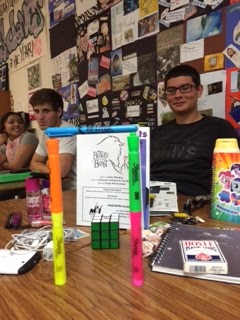
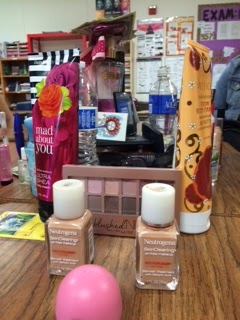
So, this week we stole 10 minutes of precious instructional minutes and built a silly sculpture. For 10 minutes, we were not worried about grades, graduation, or the future.  We were just allowed to be creative and, most importantly, laugh.  


In “Silly Sculpture” the kids are challenged to create a sculpture that symbolizes the team. The trick is, they are only allowed to use items found on them or in their backpack, binder, or purses.  This activity is three-fold:  you learn about your classmates by the items they carry (and how!), you see which kids emerge as leaders and which as followers, and finally they have to talk to each other to create one piece of art
Directions:
  1. Place kids in groups of 3-6 kids each
  2. Have groups squish desks together so there are no spaces or gaps in between.  This is their platform.
  3. Have everyone empty out their “stuff” on to the desks.  This may be the most entertaining part of all.  The stories that come with the items have the kids cracking up.  One girl had a small plastic walrus in her purse...seriously!
  4. Now give the kids 9 minutes on the timer to create their sculpture, decide what all of the items stand for and nominate one spokesperson per group to guide the class through their piece of art.
  5. Once sculpture is made, direct the groups to discuss WHY their sculpture represents their group.  Spokesperson may want to jot down notes.
  6. Spokesperson for each group stands and delivers an explanation of why their sculpture represents their group.


Some memorable explanations today:
  • Glasses for us to see the future clearly
  • asthma inhaler so we may breathe in life
  • earbuds to represent listening to each other
  • money shows we crave security
  • even a tampon to represent equality between the sexes!


I would say the entire process took about 16-17 minutes (you do need to go from group to group to “keep them moving”), but after we completed it, I had such a productive remainder of my two hour block.  The kids were energized, connected, feeling positive, and rewarded me with a strong productive writers’ workshop session.

The most important aspect of the day:  we laughed.  We all just laughed, and I for one needed that.


Tuesday, April 14, 2015

"Just Like Me" A quick classroom "pick me up" that lasts all year.

Continuing on in our spring wiggles energizer series, “Just Like Me” will become one of your most popular activities that will deepen connections between you and the students and the kids themselves while providing a much needed “brain break” from academics.
Video link from a “Just Like Me” game with my students:   
Directions:
  • The students write down four unique things about themselves on a card.  
  • Place all cards in a bowl
  • All students stand up  while I pull a card.
  • One at a time, I start listing the items written in a general way moving towards a more specific.  For example, if a student wrote "I hate spiders,” I would start with "This person hates something small."  
  • If the students agree they yell, “Just like Me” and stay standing; if they disagree, they sit down and stay seated for the rest of the game.
  • Continue to get more detailed (ex:  “this person hates something small that can bite you”)
  • Keep going until you eventually read the card as is.  There should be one last student standing and that, of course, is their card.  
  • If there is more than one, show them the handwriting and comment on how much these last kids have in common!  Twins separated at birth?
For example, I pulled the card of one of our shyest girls in class.  She rarely speaks but written on her card was “I’ve eaten kangaroo meat” and “I’ve eaten green ants.”  She had gone on a trip to Australia the previous summer but we would have never known that had we not given her this opportunity.  The students asked her many questions and she was animated and lively in her responses.  Since that day, she has now started to speak up more in class discussion and become more a part of the group.  This made her feel special and allowed a window into her life that the other kids would not have seen otherwise.  In this case, the kids were intrigued by her because of her unique experiences, but almost more powerful is when they start to understand that they have more in common with each other than they think.  All of a sudden the “gangster” sees that he has similarities to the “cheerleader” across the room.  
The unspoken power of connection makes this game a favorite activity of the students, and they will beg you to do it over and over again...trust me!

Sunday, April 12, 2015

Bear-Cowboy-Ninja: Class energizer!

Last week, my classes will resembled a collective episode of the “Walking Dead.”  Yes, it was the first week back from Spring Break and my students were zombies.

Unfortunately, I need my zombies to be productive.  After all, we are heading into testing season and my seniors have a fast pass to graduation in June.  We need to get workin’.

WIth that being said, I also needed to bridge the gap from a sloth-like spring break to an intellectual powerhouse of a classroom.  What’s a girl to do?

Bear-Ninja-Cowboy.

This is a simple energizer that includes the entire class, takes no more than 10 minutes, and will wake everyone up with a little laughter while also reconnecting your kids to one another (need to build that classroom community back up, right?).  It is a take off on ROCK-PAPER-SCISSORS, but the kids use their entire body to portray one of the three characters.  It is an elimination game, so you may want to have a little candy treat for your final two kids.

Simple steps:

1. Have everyone stand up and cue some cheesy music of your choice (I used the original soundtrack from the TV show “Glee”).  
2. Kids mill around to the music and when the music stops, so do they.
3. Have them face the person closest to them, shake hands, and then turn so they are back to back.
4. You now countdown (3-2-1-DRAW!)
5. They take three steps away from one another and then flip around on the word “DRAW”!
6. This is where they have three options:
A. BEAR:  Raise hands over head like claws, stand on tip toes, and growl REALLY LOUD!
B. NINJA:  Crouch down, pull one knee up, place hands in front of chest, flat like in a karate chop position.  Make “Ninja sounds” (i.e. hayahhh!)
C. COWBOY:  Stand up straight and tall, have two guns pulled at waist level, make a gun shot shound (bam, bam!).
7. DEATH CODE:
A. Bear KILLS Ninja
B. Ninja KILLS Cowboy
C. Cowboy KILLS Bear

8. Dead person sits down.  If there is a TIE, both people stay alive and continue to mill about the room until they pair up again.
9. Keep going until you have your final two.  Have the whole class circle around them and cheer them on.  
10. Make sure to reward then both for a job well done.

This is silly, takes little to no prep, and can be used anytime your class needs a “pick-me-up” or even when you have the dreaded ten minutes left until the bell at the end of class.

Now we shall see if the bears, ninjas, and cowboys can kill the post Spring Break zombies!  Wish me luck!

Thursday, April 9, 2015

Playing Hooky! Show Off Your Students!


Last week, we all played hooky.  Three of my colleagues and 19 of our students piled into three big white vans and zoomed up the 99 highway for an hour to the 35th Fresno State Young Writers' Conference

It was such a cool day.

Clad in purple and black and donning our literary flag (a huge white flag with a hawk holding papers and pens in her talons) we skipped through campus to the Student Satellite Center to see if we had any winners.  We did.  

Six of the 18 awards went to our young scholars at Mission Oak.  The kids were on cloud 9 as they opened up the literary magazine, The Spectrum,  that houses all of the winners’ works.  Seeing their name attached to their art in an actual book was so powerful.  Some had to stop and reread their entire short story while others took pictures of it and tweeted their words for all to see.  A handful walked a few steps away to call Mom, Dad, and Grandma.  “Yah, me.  I think I get money, too!  I love you!”

After the awards ceremony, we had lunch in the university food court (a thrill for the high schoolers, nostalgic for us teachers-who knew Panda could taste so good?).  For further inspiration, after lunch we then all split off to our break-out sessions on poetry, fiction, and non-fiction.

Why was this experience so powerful?  Because we took a risk.  We offered an opportunity for students to share their writing with a larger audience, to take it out of the confining brick and mortar walls of the English classroom and to share it with the world.  This empowers them and, in turn, empowers us as educators.  What they are doing at school has a larger impact and, therefore, the relevancy is there.

Now, as the teacher, it takes a TON of work to orchestrate a field trip:  securing funding, board approval, registration fees, a contest to pick the kids, booking judges for their writing, renting vans, scheduling a sub (sub plans!), securing chaperones, and waking up at 5:00am to pick up students...just to name a few!  HOWEVER, now that I’m finished whining, the reward of seeing your students succeed and be validated for their work publicly is priceless.  

Of course, the physical field trip can be replaced with virtual contests online.  There are hundreds of competitions and institutions that run contests for student work in all subject matters.  You just need to hunt for them.

Playing hooky for a day felt good.  It invigorated all of us by not only breaking up our routine but by celebrating and elevating student work.  Find ways to get your kids out there.  Take some risks...it gives your classroom work deeper meaning and makes you all feel alive!

Monday, April 6, 2015

Line it Up...Attack the Spring Wiggles

To combat the “spring wiggles,” you know that restlessness the kids start to get around...now... March/April and beyond (especially seniors...yikes),  I’ll be posting a series of quick and dirty energizers for your classes - some with videos from my own classroom. You may have heard of some of these before but just need a refresher, and some may be a brand new adventure and become a staple in your class.  At any rate, teachers love options, so here’s one for you to use tomorrow!
Line it up!
You can do this with the entire class for a super duper long line or split students into more manageable groups of 8-10 each.  Outdoor spaces work best but you can squeeze it into classroom with some desk shifting. Here's a video from my own classroom:  http://www.youtube.com/watch?v=ugIjFX8WSrM
  • Ask players to line up in ascending order for a variety of categories.  
  • Front person raises their hand when the team thinks they are finished. No talking allowed.
  • All players must rely on body language and hand gestures to get in the proper order. Head and feet only. You can only use your head and feet to signal where to go.
  • No talking or use of arms or hands to communicate.  
  • Options include:
  • Line up by birthday dates from January to December
  • Line up by height
  • Line up by hair length
  • Line up by hair color
  • Line up by who lives closest to school vs. who lives the furthest
  • Line up by shoe size
  • Line up by darkest color of clothing to lightest
  • Line up youngest to oldest
  • Line up by least amount of siblings to most
  • Line up by bedtimes
This is actually far more than an energizer...it’s “data collection” for you.  Observe who becomes the “leaders” and who naturally follows.  Watch for your shy ones who “hate” the activity.  Make a mental note to thank them later for participating.    Later in class, one-on-one, take a second to congratulate your leaders and thank them for taking charge.  Let them know they have the power to affect positive change on this campus and beyond.  Congratulate the student who helped the “lost” student, guiding them to their spot so they didn’t feel lost.
I especially love how it relies on eye contact and close physical contact:  kids squeezing in between one another, mouthing silent words, and then mouthing the silent “what”?  Some gently guide others by the shoulder pointing them in the right direction while others walk them over exactly to where they need to be.  This silly energizer holds more power than it seems.
Ask the kids to come up with some new categories for “Line it Up.”  Give them each a small piece of paper, and if they have some creative ideas they can place it in the empty coffee can.  Anytime students can be a part of the planning, there is more buy in.
This activity can be tailored to the time you can allot.  If you are jam-packed with a full-tilt lesson that day, do one “line it up.”  If you are caught with the dreaded 10 minutes before the final bell, do five “line it ups.”  Make it yours and have fun!